Animal welfare
SUSTAINABILITY > ESG > ENVIRONMENTAL

Animal welfare policy
Meat Segment
At Agrosuper, our Animal Welfare Policy is governed by the five freedoms proposed by the World Organization for Animal Health (OIE), in addition to the regulations laid down by the Agriculture and Livestock Service (SAG).
Thanks to the health management we undertake—which includes developing and implementing various biosecurity, surveillance, contingency, prevention, and control plans—we generate safe and traceable results, as required by our Animal Welfare Policy.
As a company, we do not use hormones or antibiotics as
growth promoters in our animals and we only use drugs when strictly necessary, always when prescribed by an authorized veterinarian.
Internal Regulations
Our Internal Regulations include a Code of Conduct that explicitly details zero tolerance of animal abuse. Our commitment includes not only ourselves but our suppliers, so that they meet the standards we expect.
Animal welfare management

Animal welfare 360°
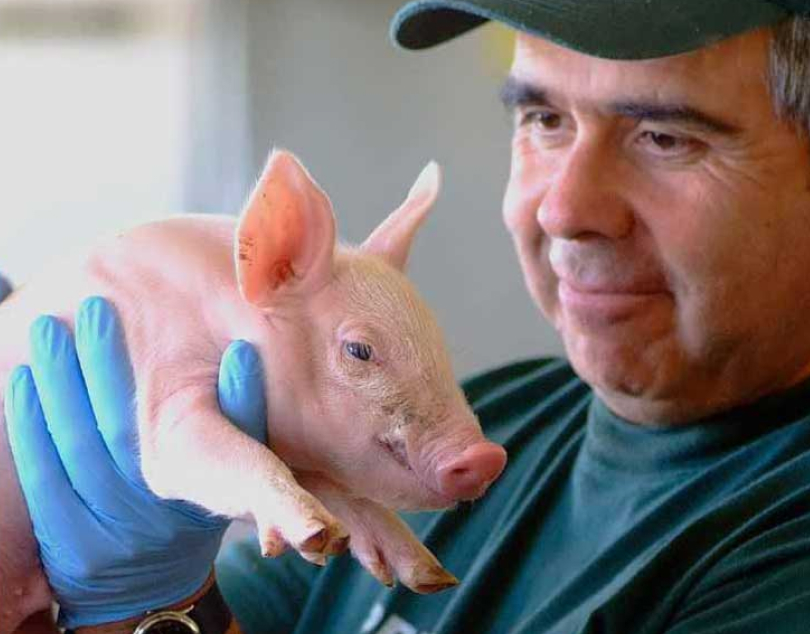
We train our employees, contractors and suppliers on Animal Welfare to ensure compliance with the required standards and foster a culture of respect, ethics and responsibility in the handling of animals.
Service Providers
We require our contractors to certify that their employees who directly interact with our animals are trained in animal welfare.
Transportation Providers
There is a contract exhibit exclusive to animal welfare that allows us to ensure compliance with our animal welfare requirements.
Employees
We regularly train all our employees on animal welfare issues using various communication channels such as internal training programs, third-party collaborations, and content on our social network JAM.
Practices and agreements

Chickens
• Catching is done in silence to avoid stress.
• We have implemented an in-ovo vaccination machine at the Lo Miranda Hatchery, which allows us to vaccinate the chicks before hatching, reducing stress.

Pigs
• We do not clip their tusks.
• We use trucks with lifts that facilitate the entry of the pigs.
• We enrich the pigs’ environment with toys and other elements that encourage their natural behaviors.
• We work in a pilot gestation pen, where we have cameras that allow us to monitor the females and learn from their behavior, so we can make the best decisions regarding their management and welfare.
• We use intradermal, needle-free vaccination technology, minimizing stress.

Salmon
• We can only achieve healthy and sustainable production if our salmon are comfortable, free from diseases, and well fed, thereby able to behave normally.
Animal welfare is a consistent concern throughout the value chain. We can only achieve healthy and sustainable production if our salmon are comfortable, free of diseases, and well fed, to achieve normal behavior.

Transport
Meat Segment
We have an asset coordinator in charge of supervising preventive maintenance of our fleet to prevent accidents. We monitor animal transport on a 24/7 basis, detecting anomalies in the traffic, the truck or on the route so that transfer times do not exceed five hours.
Aquaculture Segment
We use transportation vehicles (trucks and wellboats) that control density and constantly monitor the physiochemical parameters of the water. We use anesthetics prior to handling to decrease the stress of the fish.

Farm and cultivation
Meat Segment
We standardize our processes through an integrated management system, ensuring that all farm activities are in compliance with our policy.
Aquaculture Segment
We constantly monitor the parameters of fresh and sea water.

Faena
Meat Segment
We apply protocols that ensure 100% pain-free animals. We ensure compliance with animal transport, unloading and handling
protocols, with the permanent support and supervision of SAG.
Aquaculture Segment
The animals are slaughtered with prior desensitization, a method that prevents animal suffering.
Freedoms guaranteed for our animals
Freedom from hunger and thirst.

Freedom from discomfort.
Freedom from pain or disease.
Freedom to express normal behavior.
Freedom from fear.

Biosecurity and health in production
At Agrosuper we have established prevention, mitigation and action mechanisms to address exposure to diseases at every stage of the production cycle. Along these lines, we work in direct coordination with the Chilean Agriculture and Livestock Service (SAG) and have internal surveillance programs, which include permanent monitoring of the sanitary status and daily review of our production parameters.
When a disease enters the country, we reinforce biosecurity measures. If an outbreak is detected in any of our production facilities, we immediately trigger the emergency protocols, which have already been established and coordinated with the SAG.

Health Management
We have a preventive approach, using all available tools that incorporate biosecurity. These include the use of vaccines, genetic and nutritional improvements, smolt quality, and improvements in production infrastructure to minimize the risk of disease occurrence.
Meat Segment
Cloverleaf Certification
100% of our farms have this certification for the entire production chain, including hatchery, transportation and slaughter.
Aquaculture Segment
Validation of vaccines against piscirickettsiosis (SRS)
This is the main disease affecting fish in the sea stage and one of those with the greatest economic impact.
100% vaccine challenge test and obtaining RPS.
100% implementation of production strategy.